Footwear buyer resources · Shoe Factory Direct
A useful footwear brief makes assumptions visible before a sample or quotation is discussed. It does not need to be a finished technical pack. It should distinguish confirmed requirements, preferences and open questions.
1. Describe the product and its intended use
State the footwear category, wearer, intended activities and destination market. Add reference images with short notes explaining which features matter: silhouette, closure, upper texture, outsole appearance or branding position. Confirm that you have permission to use any design files or trademarks you provide.
2. Separate appearance from measurable requirements
Colour references and mood images describe an aesthetic direction. Material specifications, size charts, construction details and acceptance criteria describe what must be evaluated. Record both, and mark any material choice that is still open to comparison. A visual reference alone does not establish durability, waterproofing or other performance claims.
3. Share the size range and planning quantities
List the proposed size range, quantity by style and colour, and whether the figures are estimates or an approved order plan. Minimum quantities depend on the product, components, branding and supplier arrangements. They should be confirmed for the particular project rather than assumed from a generic website statement.
4. Plan sample review and version control
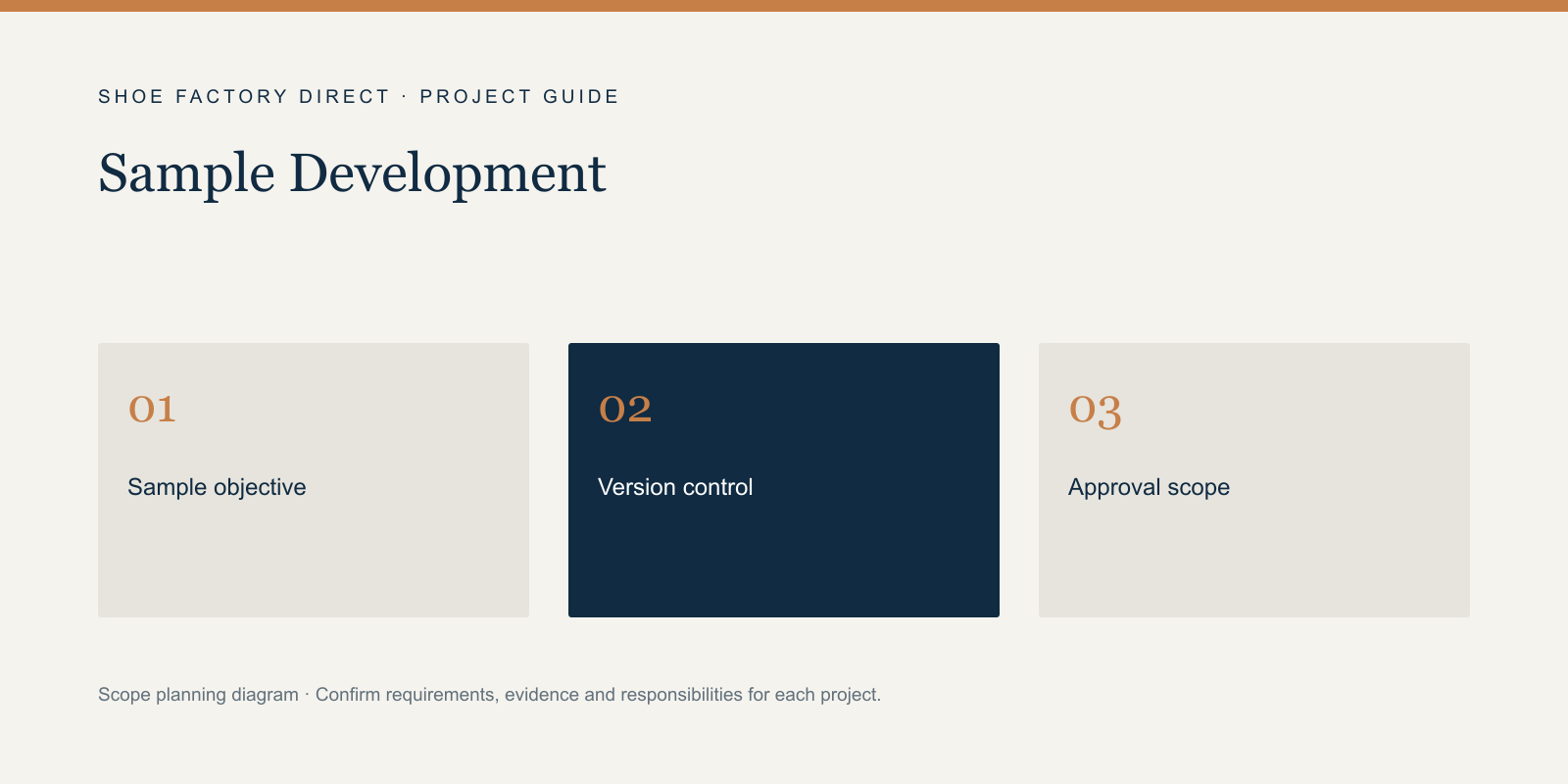
Identify who approves the design, fit, materials and branding. Give each sample and specification a version reference. Consolidate feedback into one list, distinguishing required changes from optional ideas. Approval of a visual sample should not be treated as approval of every material or production requirement unless those details were explicitly reviewed.
5. Clarify responsibilities and evidence
Ask who develops the pattern, sources materials, coordinates manufacturing, performs inspections and arranges any laboratory work. If a certificate or test report is needed, identify the market requirement and the product, material and supplier scope it must cover. Do not assume a document applies to all products or that a coordinating company owns every facility involved.
What to send first
- Product references and intended use
- Destination market and size range
- Material and branding preferences
- Estimated quantities and desired schedule
- Existing technical files and unresolved questions
Weisheng can review a brief for footwear development and sourcing coordination. Scope, participating partners, sampling arrangements, prices and timing are discussed for each project.