WEISHENG · FOOTWEAR DEVELOPMENT
Footwear Sample DevelopmentUse each sample to resolve a defined product question.
A footwear development project may begin with a sample, sketch, technical pack or product brief. Weisheng can discuss construction, materials, colors, logos, packaging and sample expectations, then coordinate a feasible route within the agreed scope.
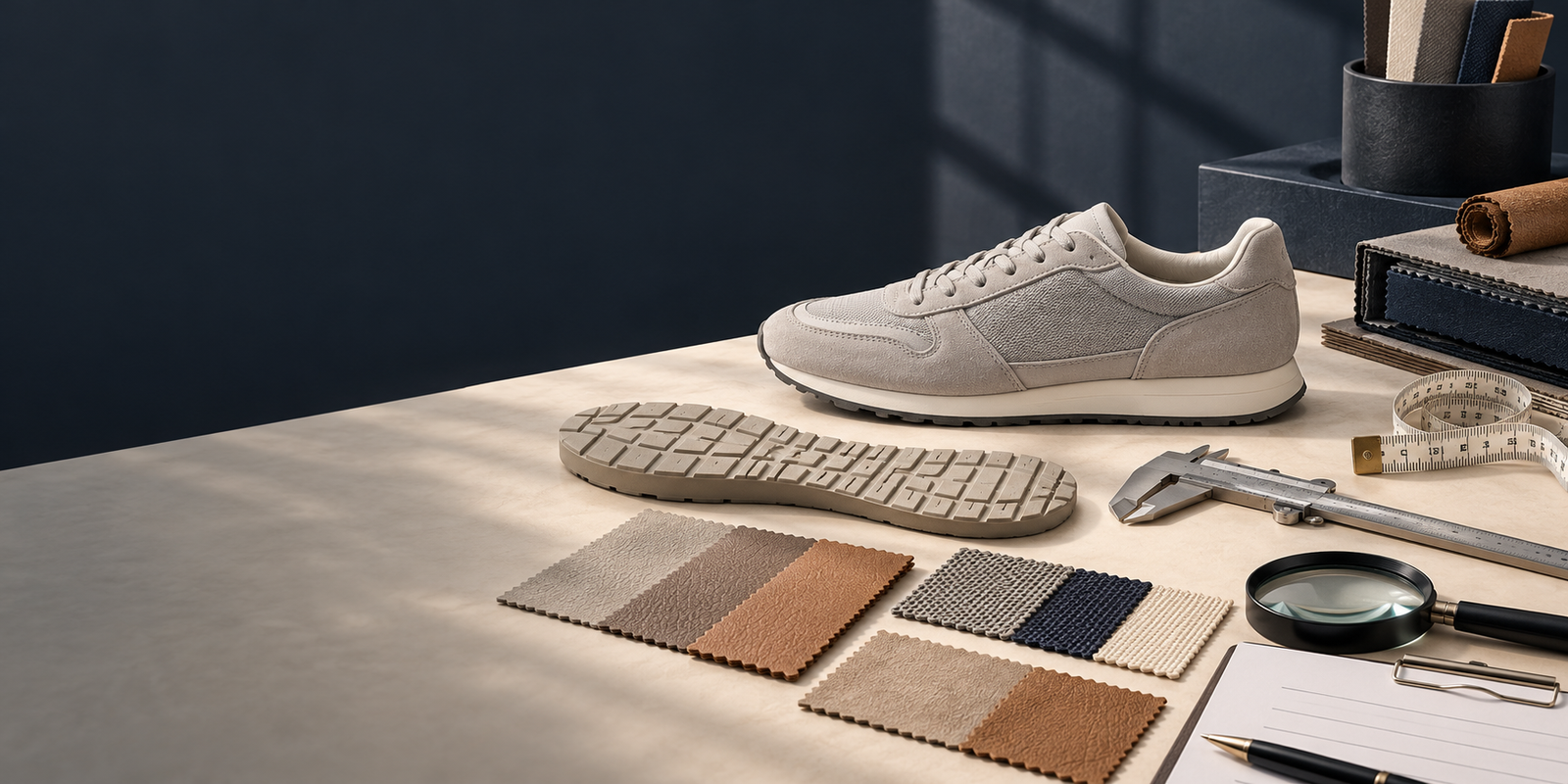
Sample development should establish what the sample is intended to demonstrate, which references apply and how the result will be reviewed. Confirm materials, branding, evaluation criteria, costs and timing individually. A development sample is not automatically an approved production reference.
01 · PROJECT SCOPE
Give every sample a clear purpose and version
The company profile recommends defining quality expectations from the sample stage. A useful sample plan makes it clear which decisions concern appearance, construction, fit, workmanship or applicable performance evidence, and which questions remain open.
Brief and development scope
Identify the product, use, market and available references. Separate existing requirements from the design or construction work that still needs review and confirmation.
Materials and sample expectations
Discuss upper and outsole direction, colors, size, branding and packing where included. Record proposed substitutions or limitations so the sample is not evaluated against an unstated expectation.
Evaluation and feedback
Agree review criteria for materials, color, workmanship, sizing, bonding, stitching, labels and appearance as relevant. Record the issue, location, expected change and responsible party.
Revision and approval
Keep sample versions and feedback linked. Confirm accepted points, required changes and the purpose of the next sample; document the approval scope before using it for order discussions.
02 · WORKING SEQUENCE
A structured sample-development cycle
- 01
Brief
Define the sample purpose and references.
- 02
Develop
Coordinate the agreed construction and details.
- 03
Review
Record feedback and evidence gaps.
- 04
Revise
Confirm changes or the approved reference.
03 · DECISION RECORD
Useful records for sample development
| Sample identity | Style, purpose, size, materials and version. |
|---|---|
| Development basis | Brief, drawings, references and agreed scope. |
| Feedback | Observed issue, photographs, requested revision and owner. |
| Decision | Accepted points, open conditions and approval responsibility. |
04 · KEEP THE BASIS CLEAR
Confirm revisions before assuming a repeat is identical
A material, construction or branding change can affect the next sample and earlier evaluation. Review the effect and agree the required work. Sample costs, revision arrangements and timing should be confirmed rather than assumed to include unlimited rounds.
05 · PRACTICAL QUESTIONS
Before moving forward
How many sample rounds are included?
The required rounds depend on the product and changes. Agree the development scope, costs, review criteria and revision arrangements for the actual project.
Does sample approval cover all performance claims?
No. Record what was reviewed and approved. Functional claims may require a defined specification and suitable evaluation or third-party testing.
Explore Footwear Development
WEISHENG FOOTWEAR
Start with your product brief
Share your references, target market and development questions. Scope, samples, pricing and timing are confirmed for the individual project.
Send a Project InquiryPrimary contact: Victor Qin
qin@shoefactorydirect.com
Sales inquiries
sales@shoefactorydirect.com
WeChat: qixun2268
Back to top ↑